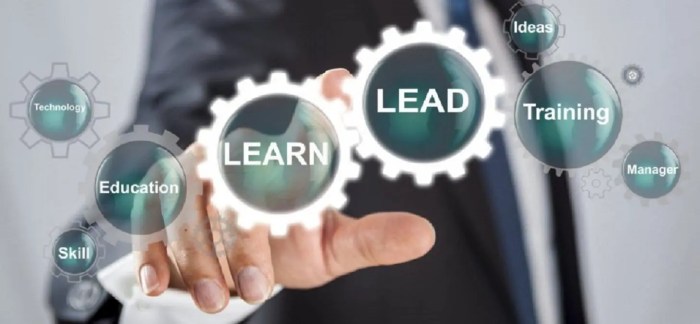
Effective leadership is the cornerstone of any successful organization, and managers play a crucial role in driving performance and fostering a positive work environment. This comprehensive guide delves into the essential aspects of leadership training designed specifically for managers, exploring curriculum design, assessment methods, and the crucial skills needed to excel in today’s dynamic business landscape. We’ll examine how to cultivate strategic thinking, navigate conflicts, and leverage technology to enhance both the training experience and ongoing managerial development.
From identifying key managerial challenges to designing engaging training programs and measuring their effectiveness, this guide provides a practical framework for developing high-performing leaders. We will cover a range of topics, including effective communication, delegation, conflict resolution, and the strategic application of data-driven decision-making. The importance of creating a supportive and inspiring learning environment will also be addressed, focusing on the role of technology and the design of the physical training space.
Defining Leadership Training Needs for Managers
Effective leadership is crucial for organizational success, and investing in leadership training for managers is a strategic imperative. This training aims to equip managers with the skills and knowledge necessary to navigate the complexities of modern workplaces and inspire their teams to achieve peak performance. This section will delve into the specific needs for such training, focusing on key challenges, the desired manager profile post-training, and a comparison of leadership styles.
Key Challenges Faced by Managers
Managers frequently encounter obstacles that hinder their effectiveness and team performance. Addressing these challenges through targeted training can significantly improve managerial capabilities and overall organizational outcomes. Three key areas requiring attention include: communication breakdowns, navigating conflict effectively, and fostering a culture of innovation and continuous improvement.
Ideal Manager Profile Post-Training
Upon completion of this leadership training, the ideal manager will exhibit several key characteristics. They will be adept communicators, capable of clearly articulating goals, providing constructive feedback, and actively listening to team members. They will also be skilled conflict mediators, able to address disagreements constructively and foster a collaborative environment. Furthermore, they will be champions of innovation, encouraging creative problem-solving and continuous improvement within their teams.
They will also demonstrate strong emotional intelligence, understanding and responding effectively to the needs and motivations of their team members.
Comparison of Leadership Styles for Managerial Roles
Different leadership styles can be more or less effective depending on the specific context, team dynamics, and organizational culture. This section will compare and contrast three prominent styles: Transformational, Transactional, and Servant Leadership.
Transformational Leadership focuses on inspiring and motivating team members towards a shared vision. Transformational leaders often empower their teams, fostering creativity and innovation. A successful example of this is Steve Jobs at Apple, whose visionary leadership propelled the company to unprecedented heights. His ability to inspire and motivate his team to achieve seemingly impossible goals is a testament to the power of transformational leadership.
Transactional Leadership emphasizes clear goals, rewards, and punishments. This style is effective in situations requiring structure and accountability. A factory production line manager, for example, might utilize a transactional approach to ensure efficiency and adherence to safety regulations. Clear expectations and consequences drive performance in such environments.
Servant Leadership prioritizes the needs of the team members. Servant leaders empower their team and foster a supportive and collaborative environment. A manager in a non-profit organization, supporting volunteers, might utilize this style, focusing on the well-being and development of their team members. This approach builds trust and loyalty, leading to higher engagement and performance.
Curriculum Design for Leadership Training
This section details a comprehensive five-day intensive leadership training program designed for managers, focusing on practical application and skill development. The curriculum is structured to build upon foundational concepts, culminating in a robust understanding of effective leadership strategies. Each day focuses on a key leadership competency, with interactive exercises and real-world case studies incorporated throughout.
Five-Day Intensive Leadership Training Program
The program is divided into five distinct days, each addressing a crucial aspect of managerial leadership. This structured approach allows for a thorough exploration of key concepts and their practical application.
| Day | Topic | Focus |
|---|---|---|
| 1 | Understanding Leadership Styles and Self-Awareness | Identifying personal leadership style, strengths, weaknesses, and impact on team dynamics. Includes self-assessment tools and group discussions. |
| 2 | Effective Communication in Management | Mastering various communication styles, active listening, delivering constructive feedback, and managing difficult conversations. Role-playing and case studies will be used. |
| 3 | Team Building and Motivation | Strategies for building high-performing teams, understanding motivational theories, and fostering a positive work environment. Includes group exercises and team-building activities. |
| 4 | Decision-Making and Problem-Solving | Developing critical thinking skills, employing various decision-making models, and effectively resolving workplace conflicts. Case studies and simulations will be utilized. |
| 5 | Strategic Leadership and Vision Setting | Developing a clear vision, setting strategic goals, aligning team efforts, and leading change initiatives. Includes presentations, group projects, and action planning. |
Effective Communication in Management: Sample Two-Hour Module Agenda
This module focuses on practical application of effective communication techniques relevant to managerial roles. The agenda balances theoretical understanding with hands-on exercises.
| Time | Activity | Description |
|---|---|---|
| 0:00 – 0:15 | Introduction and Icebreaker | Setting expectations, reviewing learning objectives, and a brief icebreaker activity to foster group interaction. |
| 0:15 – 0:45 | Communication Styles and Active Listening | Lecture and discussion on various communication styles (e.g., assertive, passive, aggressive) and the importance of active listening techniques. |
| 0:45 – 1:15 | Delivering Constructive Feedback | Practical exercise: participants provide and receive feedback in a simulated work scenario. Focus on using the SBI (Situation, Behavior, Impact) model. |
| 1:15 – 1:45 | Managing Difficult Conversations | Role-playing scenarios focusing on conflict resolution and addressing difficult conversations with employees. |
| 1:45 – 2:00 | Wrap-up and Q&A | Review of key takeaways, addressing participant questions, and assigning follow-up activities. |
Interactive Exercises for Enhanced Engagement
Engaging participants through interactive exercises is crucial for effective learning and knowledge retention. The following exercises are designed to promote active participation and collaborative learning.
The exercises below aim to reinforce key concepts learned through active participation and collaborative learning, improving knowledge retention and application.
- Leadership Style Self-Assessment and Group Discussion: Participants complete a self-assessment questionnaire to identify their dominant leadership style. Following this, they participate in small group discussions analyzing their results and exploring the strengths and weaknesses of different styles. This fosters self-awareness and encourages peer learning.
- Case Study Analysis and Role-Playing: Participants analyze real-world case studies involving communication challenges in management. Following the analysis, they engage in role-playing scenarios to practice effective communication techniques in resolving conflict or delivering difficult feedback. This develops practical skills in applying theoretical knowledge.
- Team-Based Problem-Solving Simulation: Participants are divided into teams and presented with a complex business problem requiring collaborative problem-solving and decision-making. This exercise enhances teamwork, communication, and critical thinking skills while simulating real-world workplace challenges. Teams present their solutions to the larger group for feedback and discussion.
Assessing Leadership Training Effectiveness
Measuring the success of a leadership training program requires a multifaceted approach that goes beyond simple participant satisfaction. Effective evaluation necessitates a robust strategy encompassing quantitative and qualitative data to demonstrate a tangible return on investment and improved managerial performance. This involves identifying key metrics, gathering feedback, and tracking long-term impact.
Key Metrics for Leadership Training Success
Three crucial metrics for assessing leadership training effectiveness are: participant satisfaction, observable behavioral changes, and demonstrable improvements in team performance. These metrics provide a comprehensive view of the program’s impact, spanning participant experience, behavioral shifts, and ultimately, organizational outcomes.
Post-Training Survey Design
A well-designed post-training survey is vital for gathering participant feedback and identifying areas for improvement. The survey should focus on both the training content and the learning experience itself. The following table Artikels a sample survey design:
| Question | Response Type | Scale | Notes |
|---|---|---|---|
| How satisfied were you with the overall training program? | Likert Scale | 1-5 (1=Very Dissatisfied, 5=Very Satisfied) | Assess overall program satisfaction. |
| To what extent did the training improve your understanding of leadership principles? | Likert Scale | 1-5 (1=Not at all, 5=To a great extent) | Measure knowledge gain. |
| How likely are you to apply the skills and knowledge gained in the training to your daily work? | Likert Scale | 1-5 (1=Not at all likely, 5=Extremely likely) | Gauge intention to apply learnings. |
| What aspects of the training were most valuable to you? (Open-ended) | Open-ended Text | N/A | Gather qualitative feedback on valuable aspects. |
Tracking the Impact on Managerial Performance
Tracking the impact of leadership training on managerial performance over six months requires a combination of methods. This could include 360-degree feedback assessments from peers, subordinates, and superiors, performance reviews focusing on specific leadership competencies covered in the training, and analysis of team performance metrics such as project completion rates, employee satisfaction scores, and turnover rates. By comparing these metrics before and after the training, a clear picture of the program’s impact on managerial effectiveness emerges.
For instance, a significant increase in employee satisfaction scores within teams managed by training participants, coupled with improved project completion rates, would strongly suggest the training’s effectiveness. Conversely, a lack of change or negative trends would indicate areas needing improvement in the training program itself.
Ultimately, successful leadership training for managers hinges on a multifaceted approach. By carefully considering the needs of the managers, designing a robust and engaging curriculum, and implementing effective assessment methods, organizations can cultivate a leadership pipeline capable of navigating the complexities of the modern business world. This guide has provided a roadmap for achieving this goal, emphasizing the crucial blend of practical skills, strategic thinking, and a supportive learning environment.
Investing in leadership training is not just an expense; it’s a strategic investment in the future success of the organization.
Popular Questions
What are the common pitfalls to avoid when designing leadership training?
Common pitfalls include a lack of clear learning objectives, insufficiently engaging content, inadequate assessment methods, and failure to address the specific needs of the target audience. Overly theoretical content without practical application is also a frequent issue.
How can I ensure that the training remains relevant and up-to-date?
Regularly review and update the training materials based on industry best practices, emerging trends, and feedback from participants. Incorporate case studies and real-world examples to maintain relevance.
What is the best way to measure the long-term impact of leadership training?
Track key performance indicators (KPIs) related to team performance, employee satisfaction, and overall organizational goals. Conduct follow-up surveys and interviews to assess the sustained impact of the training.
How can I create a positive and engaging learning environment?
Foster a collaborative atmosphere, encourage active participation, and use a variety of teaching methods to cater to different learning styles. Provide opportunities for networking and peer learning.