Embark on a journey through Leadership Skills Development, exploring the key components that shape successful leaders and discussing the impact of these skills on professional growth.
Delve into the strategies for honing leadership abilities and discover the various training programs available to enhance your leadership prowess.
Importance of Leadership Skills Development

Leadership skills play a crucial role in professional growth as they are essential for guiding and motivating teams towards common goals.
Enhanced Decision-Making Abilities
Developing leadership skills enables individuals to make informed decisions under pressure, leading to successful outcomes and increased confidence.
Effective Communication
Strong leadership skills facilitate clear and open communication within teams, fostering collaboration and creating a positive work environment.
Increased Productivity
Effective leaders inspire and motivate team members to perform at their best, resulting in higher productivity levels and overall success for the organization.
Key Components of Leadership Skills
Effective leadership requires a combination of various qualities and skills that enable individuals to inspire and guide others towards a common goal. Let’s explore some key components of leadership skills.
Essential Qualities of a Good Leader
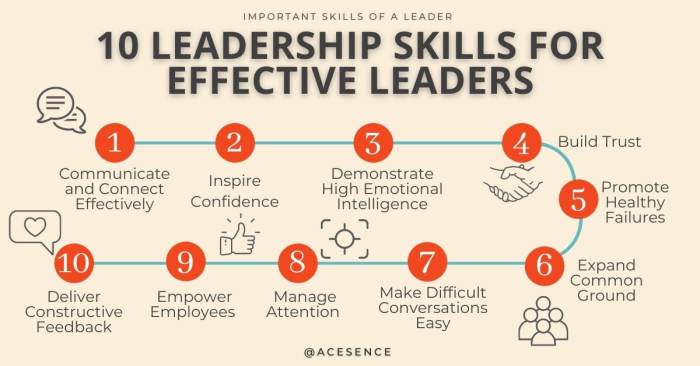
- Strong Communication Skills: Leaders must be able to clearly articulate their vision, provide feedback, and listen actively to their team members.
- Emotional Intelligence: Understanding and managing one’s emotions, as well as being empathetic towards others, plays a crucial role in building trust and fostering positive relationships within a team.
- Vision and Strategic Thinking: A good leader has a clear vision for the future and can develop strategic plans to achieve organizational goals.
- Adaptability: Being able to navigate through change and uncertainty, while remaining flexible and open to new ideas, is essential for effective leadership.
- Integrity and Ethics: Leaders must demonstrate honesty, transparency, and ethical behavior to earn the trust and respect of their team members.
Importance of Communication Skills in Leadership
Communication is a fundamental aspect of leadership, as it enables leaders to convey their ideas, expectations, and feedback effectively. Strong communication skills help in building trust, resolving conflicts, and fostering collaboration within a team. Leaders who can communicate clearly and empathetically are better equipped to inspire and motivate their team members towards achieving common goals.
Role of Emotional Intelligence in Effective Leadership
Emotional intelligence, which encompasses self-awareness, self-regulation, empathy, and social skills, plays a significant role in effective leadership. Leaders with high emotional intelligence can manage their own emotions, understand the emotions of others, and navigate interpersonal relationships with sensitivity and tact. By being emotionally intelligent, leaders can create a positive work environment, build strong team dynamics, and handle challenging situations with resilience and empathy.
Strategies for Developing Leadership Skills
Developing leadership skills requires a combination of practical tips and a positive mindset to effectively lead a team. Here are some strategies to enhance decision-making abilities, problem-solving skills, and nurture a positive leadership mindset.
Improving Decision-Making Abilities
- Seek input from team members before making a decision to gather different perspectives.
- Consider the potential outcomes and consequences of each decision before finalizing a choice.
- Reflect on past decisions to learn from successes and mistakes, improving future judgment.
- Practice making decisions in a timely manner to build confidence in your leadership abilities.
Enhancing Problem-Solving Skills
- Break down complex problems into smaller manageable tasks to approach them systematically.
- Encourage creative thinking and brainstorming sessions within the team to generate innovative solutions.
- Utilize data and information to analyze the root cause of the problem and identify potential solutions.
- Embrace challenges as opportunities for growth and development, fostering a proactive problem-solving approach.
Developing and Nurturing a Positive Leadership Mindset
- Lead by example and demonstrate a positive attitude to inspire and motivate team members.
- Practice active listening and empathy to understand the needs and concerns of your team.
- Celebrate small wins and recognize the efforts of team members to create a positive work environment.
- Cultivate a growth mindset by seeking feedback and continuously learning and improving as a leader.
Leadership Training Programs
Leadership training programs are essential for professionals looking to enhance their leadership skills and advance in their careers. These programs offer valuable insights, strategies, and tools to help individuals become effective leaders in their respective fields.
Types of Leadership Training
- On-Site Workshops: These are in-person training sessions conducted at a physical location, allowing participants to interact with trainers and peers in a face-to-face setting.
- Online Courses: Online leadership training programs provide flexibility and convenience for busy professionals who prefer to learn at their own pace and schedule.
- Executive Coaching: Personalized coaching sessions with experienced mentors can provide targeted guidance and support for leadership development.
In-Person vs. Online Training
Both in-person and online leadership training have their own advantages. In-person training allows for immediate feedback and networking opportunities, while online courses offer flexibility and accessibility for individuals with busy schedules.
Benefits of Ongoing Development Programs
- Continuous Growth: Leadership training programs enable professionals to continuously enhance their skills and stay updated with the latest trends in leadership.
- Improved Performance: Investing in ongoing leadership development can lead to improved performance, better decision-making, and increased productivity.
- Career Advancement: Professionals who participate in leadership training programs are more likely to advance in their careers and take on higher leadership roles.
In conclusion, Leadership Skills Development is a crucial aspect of personal and professional growth, empowering individuals to lead with confidence and efficiency. Take charge of your development and watch your leadership abilities soar to new heights.
FAQ Compilation
Why are leadership skills important for professional growth?
Leadership skills are crucial for navigating challenges, inspiring teams, and driving success in the ever-evolving professional landscape.
What are the essential qualities of a good leader?
A good leader possesses qualities such as integrity, empathy, effective communication, and the ability to inspire and motivate others.
How can I improve my decision-making abilities as a leader?
To enhance decision-making skills, consider gathering diverse perspectives, analyzing data thoroughly, and being open to feedback and learning from past decisions.