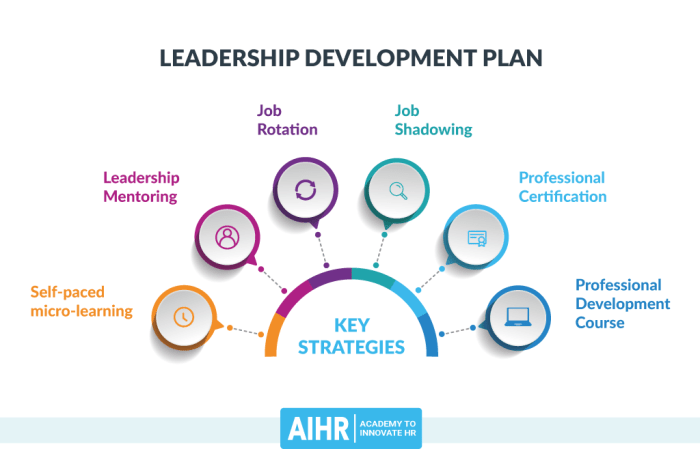
With Leadership Development for Future Leaders at the forefront, this paragraph opens a window to an amazing start and intrigue, inviting readers to embark on a storytelling journey filled with unexpected twists and insights.
In today’s dynamic world, the need for cultivating future leaders is more crucial than ever. This involves honing specific skills, fostering mentorship, and understanding the significance of emotional intelligence in shaping the leaders of tomorrow.
Understanding Leadership Development for Future Leaders
Leadership development programs play a crucial role in grooming future leaders by equipping them with the necessary skills, knowledge, and mindset to lead effectively in a rapidly changing world.
The Importance of Leadership Development Initiatives
- Organizations invest in leadership development programs to identify and nurture high-potential individuals who can drive innovation, inspire teams, and navigate complex challenges.
- These initiatives help future leaders develop self-awareness, emotional intelligence, communication skills, and strategic thinking abilities essential for effective leadership.
- Leadership development programs create a pipeline of skilled leaders who can step into key roles and ensure organizational continuity and success.
Successful Leadership Development Examples
- Companies like Google, General Electric, and IBM have implemented robust leadership development programs that focus on mentorship, experiential learning, and feedback mechanisms to groom future leaders.
- McKinsey & Company’s “Leadership Development Program” and GE’s “Crotonville Leadership Development Institute” are renowned for their effectiveness in developing the next generation of leaders.
- Non-profit organizations like Teach For All and Ashoka offer leadership development opportunities to social entrepreneurs and changemakers to drive positive impact in their communities.
Differences in Leadership Development for Future Leaders
- Leadership development for future leaders emphasizes agility, adaptability, and innovation to thrive in a dynamic and digital-driven business environment.
- Future leaders need to cultivate a global mindset, cross-cultural communication skills, and the ability to lead virtual teams across geographies.
- Unlike current leaders who may focus on honing traditional leadership skills, future leaders must also be adept at leveraging technology, fostering collaboration, and driving sustainable practices.
Key Components of Leadership Development

Leadership development programs focus on equipping future leaders with essential skills to thrive in their roles. These programs often emphasize the importance of mentorship and emotional intelligence in shaping effective leaders.
Essential Skills for Future Leaders
Future leaders need to develop a diverse set of skills to succeed in their roles. Some essential skills include:
- Communication skills to effectively convey ideas and goals to team members.
- Problem-solving abilities to address challenges and make informed decisions.
- Adaptability to navigate changing circumstances and lead through uncertainty.
- Collaboration skills to work effectively with diverse teams and stakeholders.
Role of Mentorship in Leadership Development Programs
Mentorship plays a crucial role in leadership development programs by providing future leaders with guidance, support, and valuable insights from experienced professionals. Through mentorship, aspiring leaders can learn from the experiences of others, gain new perspectives, and receive constructive feedback to enhance their leadership capabilities.
Significance of Emotional Intelligence in Shaping Future Leaders
Emotional intelligence, or the ability to understand and manage emotions, is a key component in shaping future leaders. Leaders with high emotional intelligence can build strong relationships, navigate conflicts effectively, and inspire others through their actions. By developing emotional intelligence skills, future leaders can cultivate a positive work environment, enhance team dynamics, and lead with empathy and authenticity.
Strategies for Effective Leadership Training
Effective leadership training programs are essential for developing future leaders. These programs should focus on providing comprehensive skills and knowledge to individuals aspiring to lead in various capacities. There are different approaches to leadership training that organizations can consider, each with its unique advantages and applications.
Different Approaches to Leadership Training Programs
- Mentorship Programs: Pairing aspiring leaders with experienced mentors can provide valuable guidance and support.
- Workshops and Seminars: Interactive sessions that cover leadership principles, communication skills, and other relevant topics.
- Online Courses: Accessible and flexible training modules that individuals can complete at their own pace.
- Simulations and Role-Playing: Immersive experiences that allow individuals to practice leadership in realistic scenarios.
Experiential Learning in Leadership Development
Experiential learning plays a crucial role in enhancing leadership development. By allowing individuals to apply theoretical knowledge in practical situations, they can gain valuable insights and skills. Hands-on experiences help future leaders understand the challenges they may face and develop effective problem-solving abilities.
Benefits of Incorporating Feedback Mechanisms
Feedback mechanisms are essential in leadership training programs as they provide individuals with valuable insights into their strengths and areas for improvement. Constructive feedback helps aspiring leaders enhance their skills, adapt to different situations, and grow professionally. By incorporating feedback into training sessions, organizations can ensure continuous learning and development among future leaders.
As we wrap up our discussion on Leadership Development for Future Leaders, it’s clear that investing in the growth and training of upcoming leaders is vital for organizational success. By focusing on essential skills, mentorship, and feedback mechanisms, we pave the way for a brighter future filled with capable and effective leaders.
User Queries
What are the key components of successful leadership development programs?
Successful leadership development programs involve honing essential skills, providing mentorship opportunities, and emphasizing emotional intelligence.
How does leadership development for future leaders differ from current leaders?
Leadership development for future leaders focuses on preparing them for upcoming challenges and responsibilities, whereas current leaders may already possess certain skills and experiences.
What role does experiential learning play in enhancing leadership development?
Experiential learning allows future leaders to apply their knowledge in real-world scenarios, fostering practical skills and problem-solving abilities.